

World's Highest-Volume Thyroid Cancer Surgery Center Publish Clinical Guidelines Setting Minimum Surgeon Volume Standard

The Clayman Thyroid Center is part of the Norman Clayman Endocrine Institute at the Hospital for Endocrine Surgery in Tampa, Florida. It is the nation’s highest-volume thyroid surgery center, performing over 2,500 thyroid operations each year.
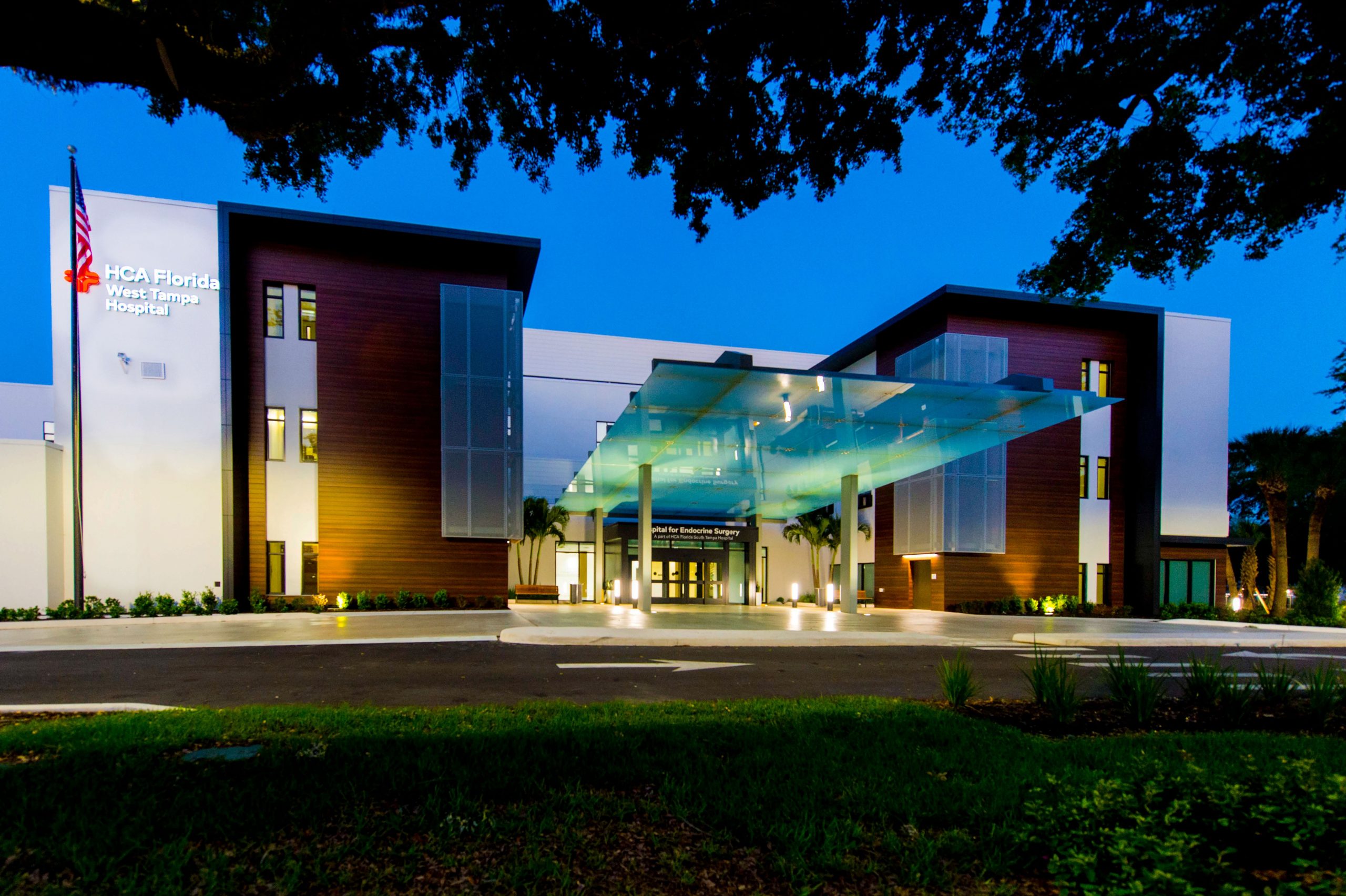
The Hospital for Endocrine Surgery, located in Tampa, Florida, is the world’s first hospital dedicated exclusively to the surgical treatment of endocrine diseases, including thyroid, parathyroid, and adrenal conditions.
September is Thyroid Cancer Awareness Month. Learn more at www.knowyourneck.com
Clayman Thyroid Center's 2026 Guidelines differ from national advice and urge patients to ask surgeons about annual volume, complications, and recurrence rates.
TAMPA, FL, UNITED STATES, September 15, 2026 /EINPresswire.com/ -- The Clayman Thyroid Center at the Hospital for Endocrine Surgery in Tampa, Florida has published the 2026 Clinical Practice Guidelines: Surgical Management of Differentiated Thyroid Cancer, a set of outcomes-based recommendations drawn from more than 40,000 thyroid cancer operations and prospective outcomes tracking spanning 1993 to 2025.The guidelines depart from the 2025 American Thyroid Association recommendations on several points, and are explicit about why — and about who they are and are not written for. They are available in full by visiting www.thyroidcancer.com/files/Clayman_Guidelines_2026_final.pdf.
Surgeon Volume as a Clinical Standard
The guidelines' first and most broadly applicable recommendation concerns not a technique but a threshold: thyroid cancer surgery should be performed by surgeons completing at least 100 thyroid operations annually, with optimal outcomes associated with surgeons exceeding 400 operations per year.
The volume-outcome relationship in thyroid surgery is long established in the peer-reviewed literature. Sosa and colleagues documented it in Annals of Surgery in 1998; Adam and colleagues revisited the question of a minimum threshold in the same journal in 2017. National data indicate that the large majority of thyroid operations in the United States are performed by surgeons doing fewer than ten cases per year.
"Volume is the variable patients can actually check, and almost nobody tells them to check it," said Gary Clayman, DMD, MD, FACS, founder and surgeon-in-chief of the Clayman Thyroid Center and lifetime Professor Emeritus at MD Anderson Cancer Center. "Ask any surgeon you are considering how many thyroid operations they performed last year, what their permanent complication rate is, and what their recurrence rate is at long-term follow-up. A surgeon who tracks those numbers will tell you. A surgeon who does not track them has told you something too."
The guidelines recommend that every center performing thyroid cancer surgery publish its own annual volume, permanent complication rate, and structural recurrence rate at long-term follow-up, and call for referral patterns and health system policy to concentrate thyroid cancer surgery at higher-volume centers.
Where the Guidelines Differ from the ATA
The central point of departure concerns prophylactic central neck dissection. The 2025 ATA guidelines advise against the procedure for clinically node-negative T1 and T2 tumors. The Clayman guidelines recommend it for all clinically staged differentiated thyroid cancers, including T1 and T2, when performed at a high-volume center with immediate intraoperative frozen section pathology available.
The reasoning rests on two claims. First, that central compartment lymph node metastases are present in a substantial share of clinically node-negative papillary thyroid cancers, and that leaving microscopic disease behind is a principal driver of the persistent disease and recurrence rates reported nationally. Second, that reoperation in a previously operated neck carries materially higher rates of nerve injury and permanent hypoparathyroidism than a complete initial operation — so the morbidity avoided at the first operation is often paid for later, with interest.
The guidelines also make frozen section pathology mandatory for central compartment dissections, on the basis that results available within 7 to 15 minutes allow the extent of surgery to be decided from the nodal disease actually present rather than from preoperative estimates.
Prospectively tracked outcomes supporting the recommendations — including a 20-year structural recurrence rate of 0.2% and a permanent complication rate of 0.4% in the Center's single-institution series — are presented with their full methodology in the document, alongside comparison data from national and international registries.
Guidelines That Say Where They Do Not Apply
The document is unusually direct about its own limits. The recommendations are conditional on infrastructure that most hospitals do not have: high thyroid surgical volume and high volume thyroid surgeons, immediate expert frozen section pathology, a dedicated endocrine pathology team, systematic nerve monitoring, and long-term follow-up capability. Centers without that infrastructure, the guidelines state, should follow the ATA recommendations.
"The ATA guidelines are appropriately calibrated for the settings in which most thyroid cancer surgery is actually performed, and we say so in the document," said Dr. Clayman. "Our disagreement is not that they are wrong. It is that they should not be read as the ceiling. The gap between the national average and what is achievable is a difference in surgical volume and expertise, infrastructure and approach — not a difference in patients. The right response is to raise the bar, not to lower the expectation."
The guidelines invite other high-volume centers to contribute prospective outcomes data toward a multi-center registry, and commit to publishing peer-reviewed manuscripts describing the underlying volume-outcome analysis and observational cohort. The document is scheduled for review in August 2028.
For Patients
The guidelines identify circumstances in which a second opinion at a high-volume center is particularly worth seeking: recurrent/persistent disease after prior surgery, lateral neck lymph node metastases, invasive tumors, complications from previous thyroid surgery, familial thyroid cancer syndromes, and any patient whose surgeon performs fewer than 100 thyroid operations per year.
During Thyroid Cancer Awareness Month, the Clayman Thyroid Center also encourages people to "Know Your Neck." A new lump, neck swelling, persistent neck changes, difficulty swallowing, or unexplained hoarseness should be discussed with a qualified healthcare professional. Visit www.knowyourneck.com for more information and a video demonstration.
2026 Clinical Practice Guidelines: Surgical Management of Differentiated Thyroid Cancer was authored by Gary L. Clayman, DMD, MD, FACS; Rashmi Roy, MD, FACS; Nate Walsh, MD, FACS; Eyas Alkhalili, MD, FACS; and Joshua Ziehm, MD, FACS. The authors report no financial relationships with pharmaceutical or medical device manufacturers, and the guidelines received no external funding.
About the Clayman Thyroid Center:
Founded by Dr. Gary Clayman, a nationally recognized leader in thyroid surgery and former Chief of Endocrine Surgery at MD Anderson Cancer Center, the Clayman Thyroid Center is one of the highest-volume thyroid surgery centers in the world. Located within the Hospital for Endocrine Surgery in Tampa, Florida, the Center is a global destination for patients seeking expert care for thyroid disease and thyroid cancer, performing more thyroid surgeries than any other hospital in the United States. To learn more, visit www.thyroidcancer.com or call (813) 940-3130. Become a patient by visiting https://www.thyroidcancer.com/surgery.
About Hospital for Endocrine Surgery
The Hospital for Endocrine Surgery is a campus of HCA Florida South Tampa Hospital focused on compassionate patient care and highly specialized treatment of endocrine tumors. We provide a wide array of services necessary for the diagnosis and surgical treatment of tumors of the thyroid, parathyroid and adrenal glands. Our team includes doctors, surgeons, nurses and technicians who have dedicated their careers to delivering the highest cure rates using the most advanced techniques available. HCA's Hospital for Endocrine Surgery is the nation's highest volume hospital for thyroid, parathyroid, and adrenal tumors and cancers. To learn more visit www.hospitalforendocrinesurgery.com.
# # #
Diana Van Leuven
The VAN LEUVEN Company
email us here
Legal Disclaimer:
EIN Presswire provides this news content "as is" without warranty of any kind. We do not accept any responsibility or liability for the accuracy, content, images, videos, licenses, completeness, legality, or reliability of the information contained in this article. If you have any complaints or copyright issues related to this article, kindly contact the author above.
